
Tesla recently officially launched operations in Colombia, marking a significant milestone as the country becomes the electric vehicle manufacturer's 50th global market and second in South America after Chile.
Read moreColombia's electricity distributors and retailers have issued a dire warning about proposed regulatory changes that could devastate the sector.
Read moreColombia's Ministry of Mines and Energy announced an extensive incentive package on November 24, 2025, aimed at accelerating the development of electric vehicle charging infrastructure nationwide. The measures promote sustainable mobility, attract investment, and reduce operating costs for charging service providers.
Read moreColombia's electricity spot market experienced a dramatic 88.7% price decline in October 2025 compared to the same month in 2024, but consumers should not expect similar reductions in their energy bills.
Read moreWhen Ecopetrol took over the moribund Windpeshi Wind Farm project in La Guajira, we thought the NOC’s emphasis on political rather than shareholder outcomes might prove successful. Looks like it has.
Read moreEnergy demand in October 2025 increased 2.44% compared to September 2024, with consumption exceeding 7,197 gigawatt-hours. The Caribbean region led consumption across Colombia's 10 major regions monitored by XM, the country's electric market operator.
Read moreHitachi Energy has identified six key trends and solutions critical for accelerating the electrification of the mining industry in Colombia as the sector faces pressure to adopt sustainable practices and meet the country’s energy transition goals.
Read moreGrupo Energía Bogotá (GEB) has secured a key contract from Colombia's Mining-Energy Planning Unit (UPME) on November 24 to build, operate, and maintain the 230 kV Sopó substation and associated transmission lines in Guasca, Sopó, and La Calera, Cundinamarca.
Read moreISA's president, Jorge Carrillo, announced the company will expand into energy storage while maintaining its core businesses of electricity transmission and infrastructure.
Read moreColombia is currently experiencing an unprecedented surge in electric vehicle (EV) sales, a phenomenon described as a "boom" with a remarkable 155% growth in 2025 alone. However, this swift market expansion is met with a notable lag in the development of charging infrastructure.
Read moreColombia inaugurated "Pétalo del Norte I," its first solar project to meet international standards, located in La Esperanza, Norte de Santander.
Read moreACIEM, the Colombian engineers’ association published this article advocating nuclear power investment for the country’s Caribbean region. While the Caribbean is the country’s center for renewable energy, that needs complementary firm power to smooth out the irregularities of Mother Nature and coal is no longer a long-term strategic option.
Read moreColombia’s longstanding struggle to guarantee universal access to energy is resurfacing with urgency.
Read moreColombia took center stage at COP30 in Belém after Environment Minister (MinAmbiente) Irene Vélez unveiled the Belém Declaration, a political manifesto calling for a concrete, enforceable roadmap to phase out fossil fuels, “not symbolically, but tangibly,” she said to a packed room filled with applause and slogans of support.
Read moreGlobal investment in the energy transition reached a record US$2.4T in 2024, growing 20% year-on-year, according to a new report from the International Renewable Energy Agency (IRENA).
Read moreA brief remark at the VIII Petroleum, Gas and Energy Summit was enough to stir debate across Colombia’s energy sector.
Read moreColombia’s energy sector is facing mounting pressure, and the country’s most vulnerable point remains the Caribbean region.
Read moreColombia’s Ministry of Mines and Energy (MinEnergia) opened the door to one of the most controversial reforms in recent years: a proposal to structure electricity bills based on consumption levels rather than socioeconomic strata.
Read moreAt the VIII Petroleum, Gas and Energy Summit, the conversation shifted to one of the sector’s most persistent concerns: Colombia’s heavy fiscal burden on the energy industry.
Read moreColombia’s energy and hydrocarbons sector is navigating a moment of uncertainty marked by supply risks, declining self-sufficiency, and pressure to accelerate the shift toward cleaner sources. In this context, engineers have emerged as central players in shaping a transition that is technically sound, environmentally responsible, and aligned with long-term national interests.
Read moreColombia reduced its overall energy poverty in 2024, but the progress was uneven, and Atlántico suffered the steepest setback.
Read moreA new attack on critical energy infrastructure in Cauca has raised alarms over the growing risks facing Colombia’s electrical system.
Read moreThe Amazon’s energy transition took center stage at COP30 in Belém, where local governments and the regional development bank Fonplata highlighted how renewable projects, properly financed, can transform isolated communities long dependent on diesel.
Read moreElectrical hazards have become a silent, persistent killer in Colombia, and nowhere is the threat more alarming than in Antioquia.
Read moreColombia marked a historic milestone in its energy transition after the government approved the construction of two solar parks near the Sierra Nevada de Santa Marta, projects in which the Arhuaco people will participate as direct partners for the first time in a National Interconnected System (SIN) initiative.
Read moreColombia made regional history this year by becoming the first Latin American country to award an offshore wind contract, yet the achievement comes with a warning label.
Read moreSunCompany is entering a new phase. After more than a decade developing hybrid renewable systems that blend solar generation, storage, and advanced control technologies, the company has formally evolved into an international holding designed to accelerate its expansion across Colombia and the Caribbean.
Read moreEcopetrol (NYSE: EC) has taken a major step in its energy transition strategy after closing the purchase of Statkraft’s solar portfolio in Colombia for US$157.5M.
Read more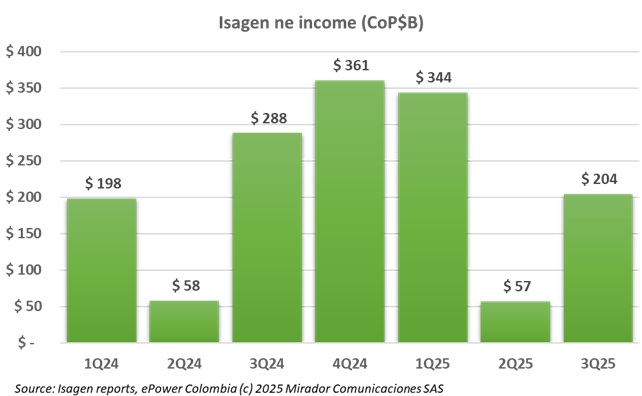
Isagen reported a sharp decline in its financial performance for the third quarter of 2025, reflecting lower energy prices and reduced financial income.
Read moreEnergy storage is rapidly moving to the top of Colombia’s agenda as the country confronts both the urgency of its energy transition and the looming risk of an electricity deficit starting as early as 2028.
Read moreColombia’s path toward a more reliable, modern energy framework took center stage at the 2025 International Regulatory Forum, an event organized by Naturgas in partnership with Universidad Externado and supported by the National Hydrocarbons Agency (ANH).
Read more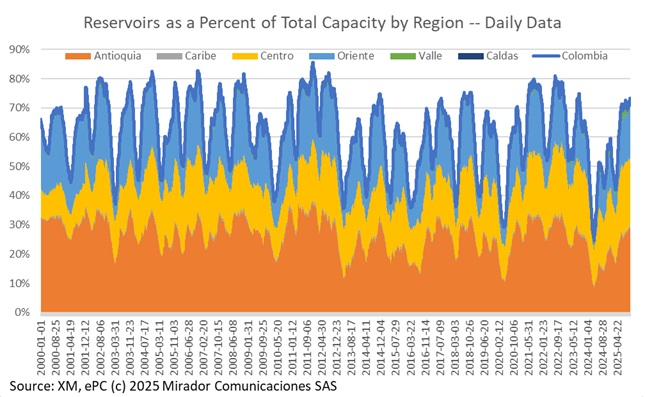
Well maybe not rain a lot or even right now, but enough to ensure that when the dry season arrives in December (as all Colombians hope it does) the hydro dam reservoirs are full enough to maintain power without problems.
Read moreAs 2025 draws to a close, optimism about Colombia’s energy future is being overshadowed by an unsettling reality: the country is running out of time to expand its electricity supply.
Read moreCandelaria, a small municipality in Atlántico, has just taken a pioneering step in environmental education with the launch of the region’s first Escuela Energética.
Read moreBarranquilla is redefining what a Latin American city can accomplish when political will, community participation, and clean-energy innovation move in the same direction.
Read moreMore than a year after the intervention of Air-e, the company responsible for supplying electricity to 1.3 million users in Atlántico, Magdalena, and La Guajira, the promised turnaround remains out of reach.
Read moreCopper has quietly emerged as one of the most strategic minerals for Colombia’s energy transition.
Read moreThe Banco de Bogotá is accelerating Colombia’s shift toward clean mobility, allocating nearly CoP$1.3T (about US$325M) since 2023 to finance electric vehicles across the country.
Read moreColombia’s electric sector is sounding new alarms as only a quarter of the country’s planned capacity additions materialized in 2024, deepening concerns of a supply crunch by 2026. That was the central warning delivered by John Maya, CEO of Empresas Públicas de Medellín (EPM), during the 11th International Electric Sector Fair (FISE 2025) in Medellín.
Read moreColombian construction firm Conconcreto announced on Friday that it will not have to face a nearly CoP$10T (US$2.5B) lawsuit filed by Empresas Públicas de Medellín (EPM) over the 2018 crisis at the Hidroituango hydropower project.
Read moreLatin America is entering a critical decade for its energy security. While the region has long benefited from abundant natural resources and a diversified energy mix, a combination of growing demand, declining local production, climate-driven volatility, and persistent infrastructure delays is placing unprecedented pressure on the continent’s ability to maintain energy sovereignty, according to a recent analysis on regional risk factors.
Read moreColombia’s renewable energy landscape reached a new milestone this week as Atlas Renewable Energy officially inaugurated Shangri-La, a large-scale solar plant in Ibagué, Tolima, now positioned among the biggest solar power facilities in the country.
Read moreAs Colombia races to meet surging electricity demand, renewable energy developer Erco Energía says the country must embrace a practical, dual-track approach: expand solar and storage capacity while still relying on oil and gas to keep the lights on.
Read moreColombia is a country of vast and diverse territories, mountains, rivers, forests, coasts, and urban centers, where communities not only live, feel, and traverse the land, but also face the increasing pressures of climate variability, soil transformation, and changing water dynamics.
Read more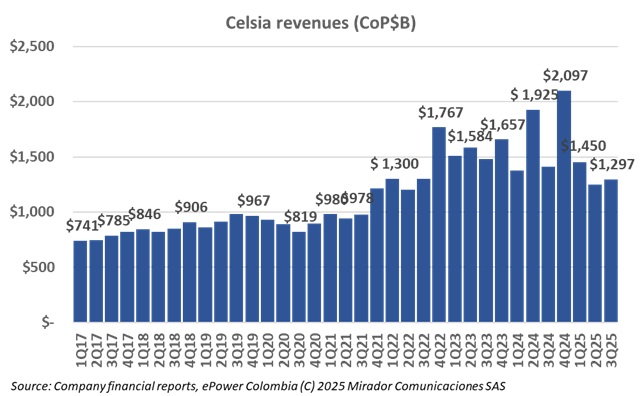
Celsia Colombia S.A. E.S.P. reported mixed results for the third quarter of 2025, reflecting the shifting conditions of Colombia’s energy market as the country moves beyond the effects of El Niño and faces lower spot prices.
Read moreBarranquilla is taking a major step toward clean energy with the installation of more than 500 solar panels in the Las Gardenias housing project, an initiative that will make it the city’s first community energy hub.
Read moreColombia is preparing a major boost for small businesses seeking to adopt clean energy. During the CELAC–European Union Summit, Minister of Mines and Energy (MinEnergia) Edwin Palma Egea announced that the government will finance up to 90% of solar solutions for shopkeepers and small commercial establishments consuming up to 3.0 kW.
Read moreDespite Colombia’s progress in adopting renewable energy, experts warn that the country is far from achieving a true energy transition.
Read moreColombia’s path toward a cleaner and more competitive energy system is facing a financial and regulatory race against time.
Read moreEnel Colombia announced the completion of the energization process for all 30 subfields of its Guayepo III Solar Park (180 MWac), located in the municipality of Ponedera, Atlántico.
Read moreThe department of Atlántico is positioning itself as one of Colombia’s main engines for the national energy transition, following strong support from the Ministry of Mines and Energy and new collaborations with international offshore wind companies.
Read moreA few weeks ago, I wrote an article about the needs of the many and the needs of the few, using this idea to talk about the ability of small groups to prevent energy investments that are vital for “keeping the lights on”. Recently, I came upon an article about the French government’s frustrating attempts to move the inhabitants of Miquelon to safety and that got me thinking about North America’s St. Lawrence Seaway where the Ontario government moved 7,500 people to make way for a hydro dam.
Read moreThe Colombian government pushed back against recent warnings from the Comptroller General’s Office about the country’s energy stability, asserting that “energy security is not at risk” and inviting the oversight body to a joint technical meeting to review data and progress.
Read moreThe sun may be shining on Colombia’s renewable ambitions, but new 2026 regulations could cast a long shadow over the country’s solar energy sector.
Read moreDuring the Central America–European Union Business Forum, Colombia’s Minister of Mines and Energy (MinEnergia), Edwin Palma, highlighted the renewed confidence the European Union (EU) has placed in Colombia’s role in the global energy transition.
Read moreIn a historic and symbolic move, Cartagena has retired its iconic horse-drawn carriages, replacing them with electric vehicles as part of a broader effort to modernize tourism and end decades of animal exploitation.
Read more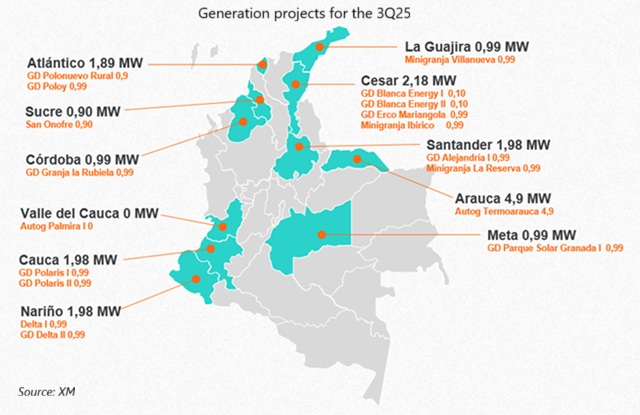
Colombia’s electric grid gained strength during the third quarter of 2025, as five transmission projects and 18 generation initiatives entered commercial operation, bolstering the country’s National Interconnected System (SIN).
Read moreIn Colombia’s Congress, urgency often overshadows importance, and that may explain why the government’s flagship energy reform bill, aimed at reducing electricity tariffs, remains stalled.
Read moreColombian transmission network operator Interconexión Eléctrica S.A. (ISA), a subsidiary of Ecopetrol (NYSE: EC), expects to obtain the environmental license for its long-awaited interconnection project with Panama in 2026, marking a crucial step toward regional energy integration.
Read moreBeneath the glow of Cartagena’s historic Clock Tower, thousands of families live in the shadows, literally.
Read more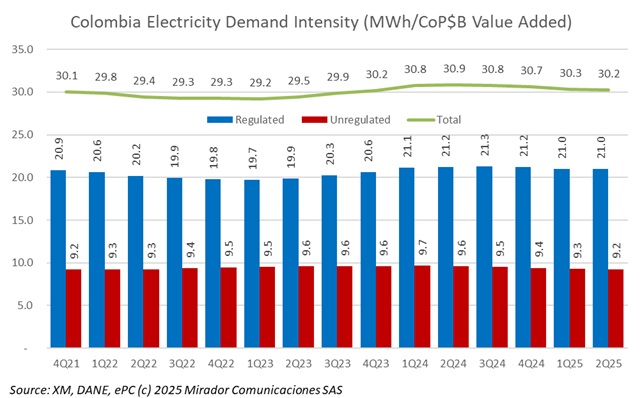
A new report by Erco Energy suggests that Colombia could significantly accelerate its economic growth if it secures a reliable, clean, and competitively priced electricity supply.
Read moreRenewable energy company Solenium has announced a major milestone in its mission to expand clean energy access across Colombia.
Read moreInterconexión Eléctrica S.A. (ISA) reported its 3Q25 operational and financial results.
Read moreSanta Marta will soon host a high-level summit designed to reshape economic and technological relations between Latin America, the Caribbean, and the European Union.
Read more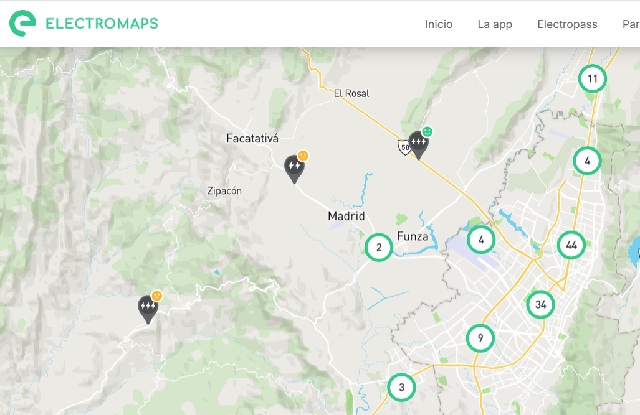
Bogotá is gearing up for an electric transformation. The city will soon feature a fast-charging station for electric vehicles every two kilometers under the ambitious project “Bogotá 2Km: Energía que te encuentra.”
Read moreColombia’s electric power sector is facing a financial short circuit.
Read moreA confidential report delivered to Colombia’s Ministry of Mines and Energy (MinEnergia) by XM, operator of the country’s electricity market, has set off alarm bells across the energy sector.
Read more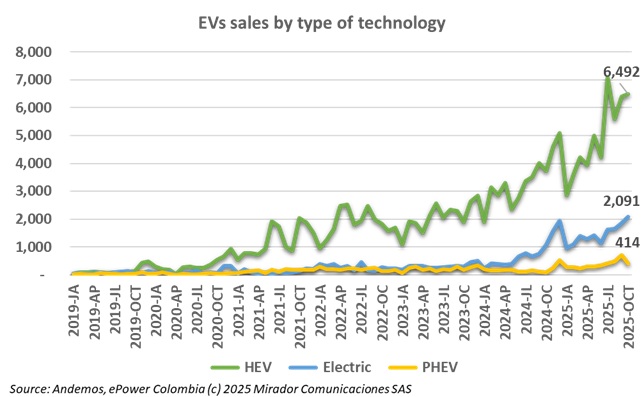
The National Association for Sustainable Mobility (Andemos) published its monthly report on the behavior of the hybrid and electric vehicle market in October, 2025. Here are the details.
Read moreAES Colombia plans to begin construction on its four wind farms in La Guajira in 2026 as part of the Jemeiwaa Ka’I project, developed in partnership with Ecopetrol (NYSE: ECP).
Read moreIn a move that blends gratitude, innovation, and a commitment to Colombia’s energy future, Positive Energy SAS, a company founded by graduates of Universidad del Norte, announced the launch of a full scholarship for students entering the Electrical Engineering program.
Read more
A few weeks ago I was writing about solar power and thinking about sources of variability, when this line from an old Joni Mitchell song popped into my head. I penciled writing about it into the schedule but kept putting it off. Now I have no excuse but to explore what it means for the Colombian energy matrix. (Photo source: https://www.accuweather.com/en/co/national/satellite-wv, 2025 11 05 16:45 COT)
Read moreThe Petro administration is celebrating what it calls a historic milestone in Colombia’s energy transition: surpassing 3.0 gigawatts (GW) of installed non-conventional renewable capacity. Yet, behind the triumphant headlines lies a less flattering reality, one that energy experts warn could mask structural weaknesses in the country’s power system.
Read moreColombia’s energy transition will not mean the immediate disappearance of fossil fuels.
Read moreColombia’s Interconexión Eléctrica S.A. (ISA) has denied reports suggesting it had entered into agreements or initiated discussions to reactivate the long-dormant electrical interconnection with Venezuela, clarifying that no such negotiations are underway.
Read moreIn the heart of Barrio Abajo, just steps away from the Casa and Museo del Carnaval, a small sewing workshop hums with purpose. But this workshop stands apart from others: it runs on solar energy.
Read moreThe Colombian government has authorized electricity distributors in the Caribbean region to postpone planned infrastructure investments; a move officials say is meant to prevent service disruptions, but one that industry experts warn could worsen the country’s long-term energy reliability.
Read moreIn a step toward cleaner energy and sustainability, Colombia’s Ministry of Defense (MinDefensa) and Empresas Públicas de Medellín (EPM) have signed an agreement to install a large-scale solar panel system at the Fortaleza Building, the ministry’s main administrative complex in Bogotá.
Read moreFuel distributor Organización Terpel S.A. is accelerating its entry into Colombia’s electric mobility market with the creation of a new subsidiary, Terpelire S.A.S., aimed at strengthening the company’s position in the country’s fast-growing clean transport sector.
Read moreAs part of its commitment to transforming the Caribbean region’s energy culture, Air-e Intervenida is expanding its community outreach with a successful program that has already trained more than 54,000 users in responsible energy use.
Read more