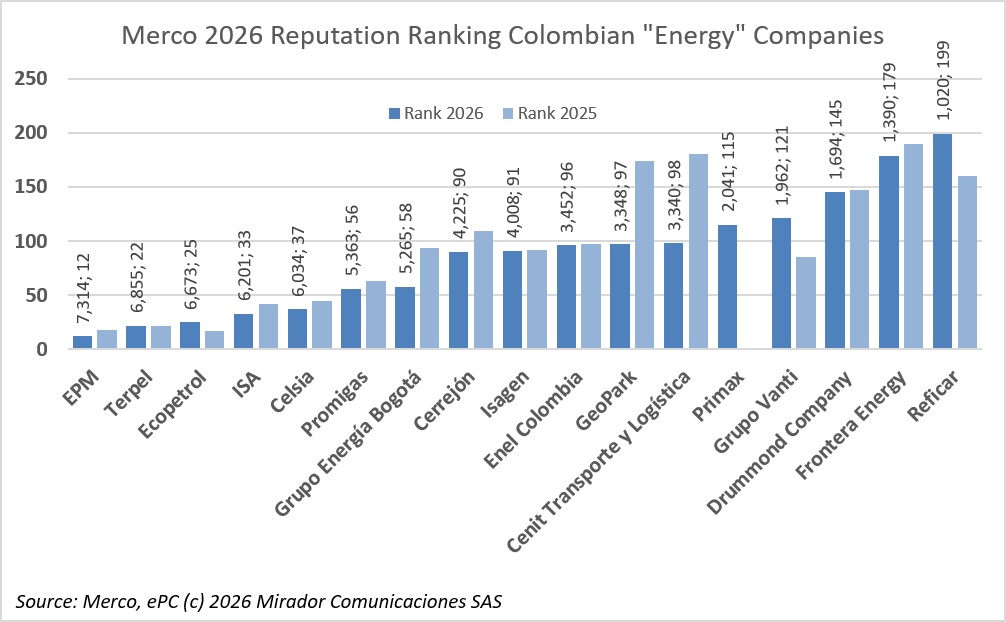
EPM is the highest-ranked energy company in Merco's 2026 Colombia reputation ranking, at 12th, while Ecopetrol fell eight places to 25th.
Read morePresident Abelardo de la Espriella has issued a directive that reshapes how Colombia handles prior consultation with ethnic communities, replacing three earlier presidential directives.
Read moreVice President José Manuel Restrepo says the government will work to unblock energy projects in La Guajira that could bring in about US$2.5B of investment.
Read moreBarranquilla used an energy session at an Organization of American States competitiveness forum to present its renewable plans to investors, led by an offshore wind project of 350 MW that could reach 700 MW.
Read moreThe new head of Barranquilla's chamber of commerce has put energy at the top of his agenda, starting with the debts of troubled distributor Air-e.
Read moreAltia, a Colombian generation platform with a gas-fired plant in Casanare, has bought 219 MWp of hydro and solar capacity from Isagen, giving it a footprint in three generation technologies.
Read moreAir-e, the state-intervened distributor serving Colombia's Caribbean coast, is running an energy-saving awareness campaign in Atlántico, Magdalena and La Guajira as consumers worry about surcharges tied to higher electricity use.
Read moreColombian buyers of electric and eligible hybrid cars have five years from the date on the sales invoice to ask the DIAN tax authority for a VAT refund, even if the UPME energy-planning certificate arrives after the purchase.
Read moreLandfill biogas is being pitched as a modest complement to Colombia's power supply as El Niño tightens the system, and Barranquilla hosts the country's largest plant.
Read moreColombia's weather agency has officially declared El Niño, and the wholesale-market operator says electricity supply could fall short next April unless thermal plants run flat out.
Read moreMines and Energy Minister María Nohemí Arboleda has warned Congress that electricity tariffs will increase, as hydropower can no longer cover all demand and El Niño pushes the system toward expensive gas-fired generation.
Read more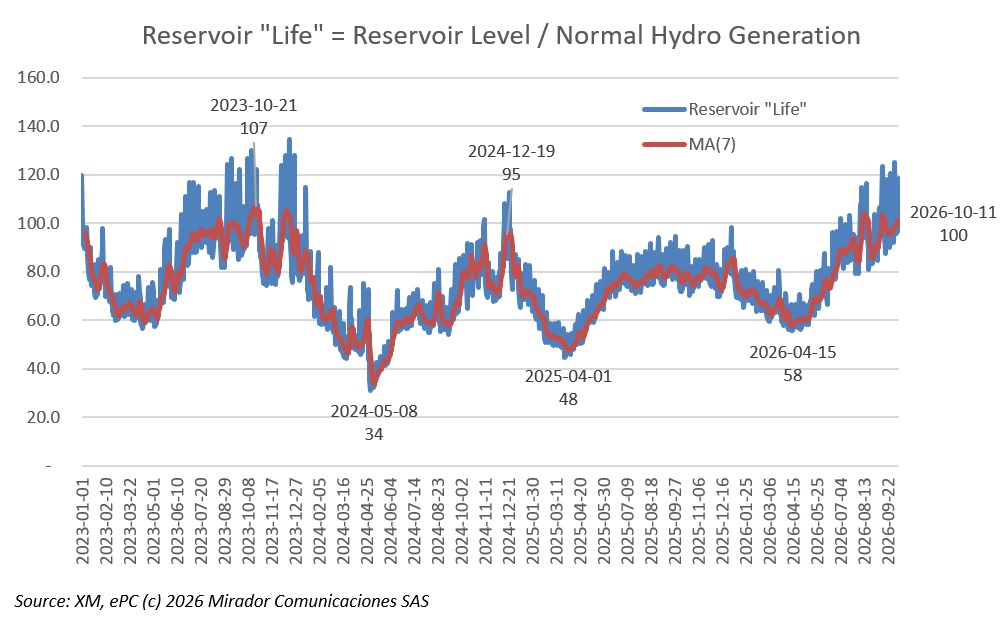
We updated our El Niño monitoring charts for the latest available numbers from XM. Our key indicator, which we call “Reservoir Life” is holding steady.
Read more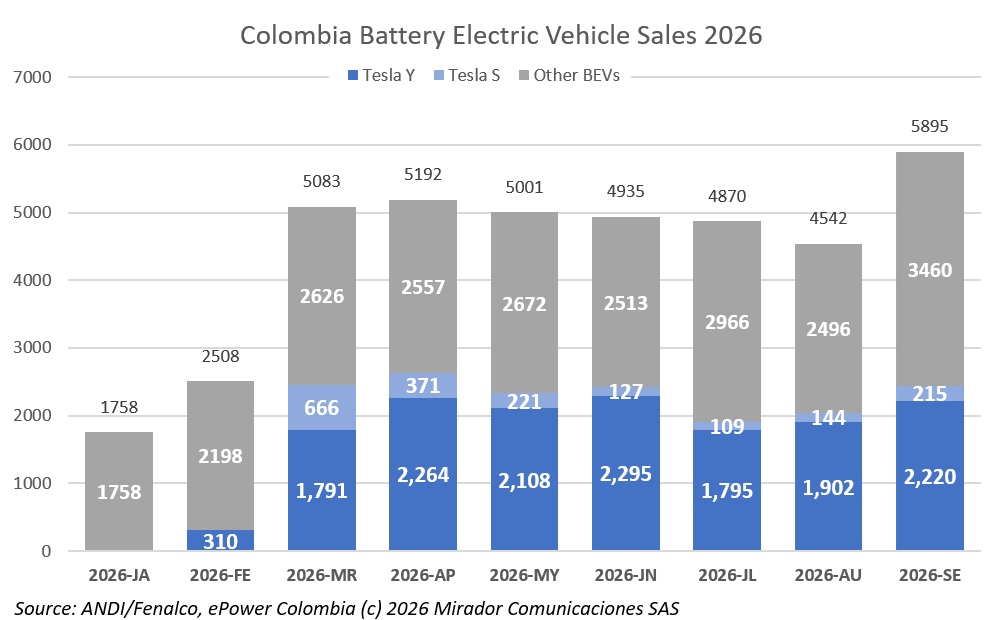
Electric and hybrid models made up 50.7% of new vehicles registered in Colombia in September, with 17,156 units.
Read moreCesar has become Colombia's second-largest solar-generating department, behind only Atlántico, as small and large projects multiply across the north of the country.
Read moreColombia's government has set December 31st as the deadline to remove any risk of a blackout and issued its first concrete measure, a decree on thermal plant fuel.
Read moreEl Heraldo's editorial board backs the government's decision to reassign CoP$1.2T to cover Air-e's debts but warns the payout must not shield those who ruined the utility.
Read more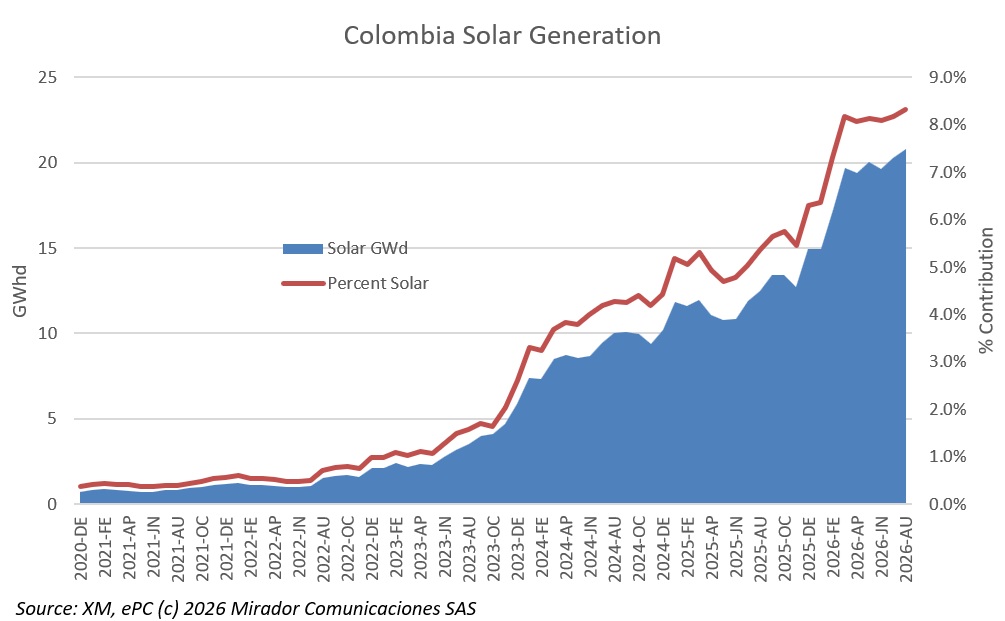
Ten large solar projects, all in operation, anchor Colombia's utility-scale fleet, and Enel and Isagen lead the list.
Read moreA Universidad Nacional study of small modular nuclear reactors (SMRs) in Colombia's Coffee Region is in final evaluation for funding from the national royalties system, with a goal of making the initiative a reality by 2035.
Read moreThe first electricity bills with penalties under Colombia's El Niño savings scheme have reached Caribbean households, drawing protests from consumer groups, ombudsmen and lawmakers who say the program ignores the region's heat.
Read moreA total power outage lasting four hours would expose about CoP$460.8B of economic value across Colombia's seven Caribbean departments, according to an estimate by the think tank Fundesarrollo.
Read more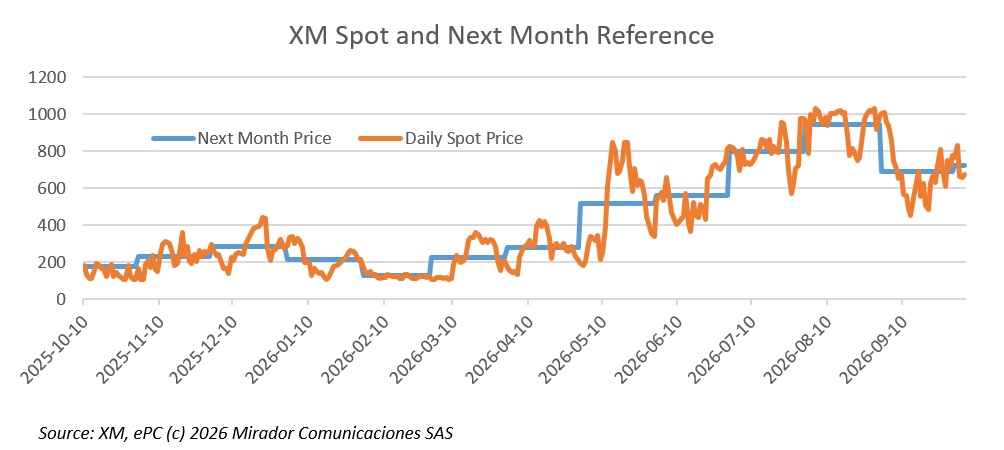
Colombia's spot power price averaged CoP$946.6 per kWh in August, up 278.2% from CoP$250.3 a year earlier and 18.7% from July.
Read moreWithout thermal generation, Colombia's power system has no real protection in a drought, argues an El Heraldo opinion column.
Read moreColombia's utilities regulator will watch hydro and thermal plants, company finances and grid assets for signs of trouble during El Niño.
Read moreHitachi Energy and Eve Air Mobility are partnering on the electrical infrastructure that electric vertical takeoff and landing aircraft (eVTOLs) will need, framing grid capacity, not aircraft, as the main challenge.
Read moreColombia has formally suspended electricity sales to Ecuador, pausing a trade that earned CoP$530.7B between January 2025 and August 2026.
Read morePresident Abelardo De la Espriella met Caribbean governors, mayors and power-sector officials on the night of October 1 to start a roadmap for El Niño and the risk to energy supply.
Read moreA repeat of Colombia's 1992 power rationing would cost about CoP$30.7T, and a columnist argues that unpaid Caribbean power debt has made the system more fragile than it looks.
Read more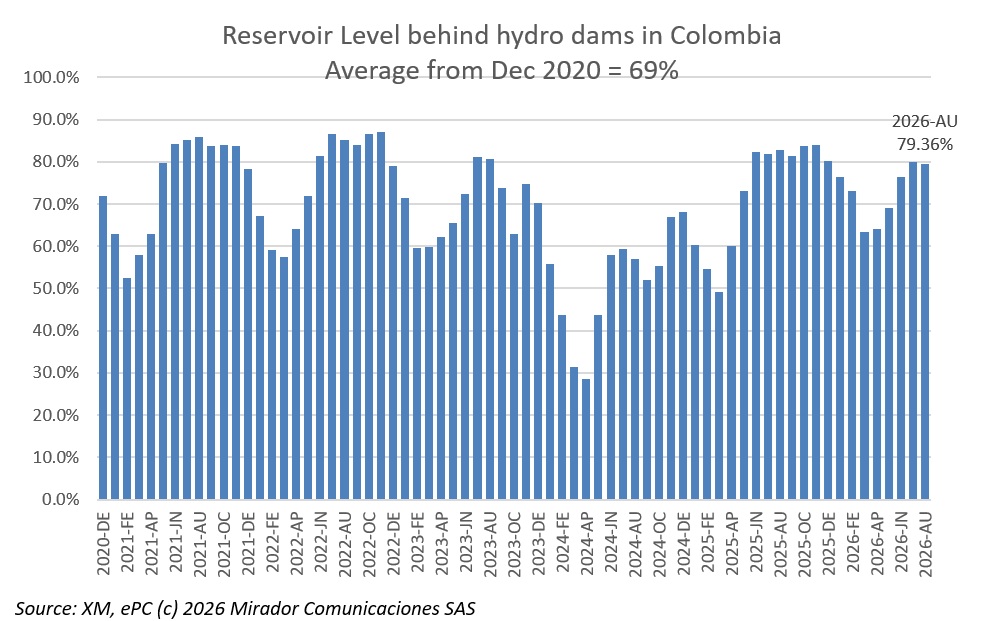
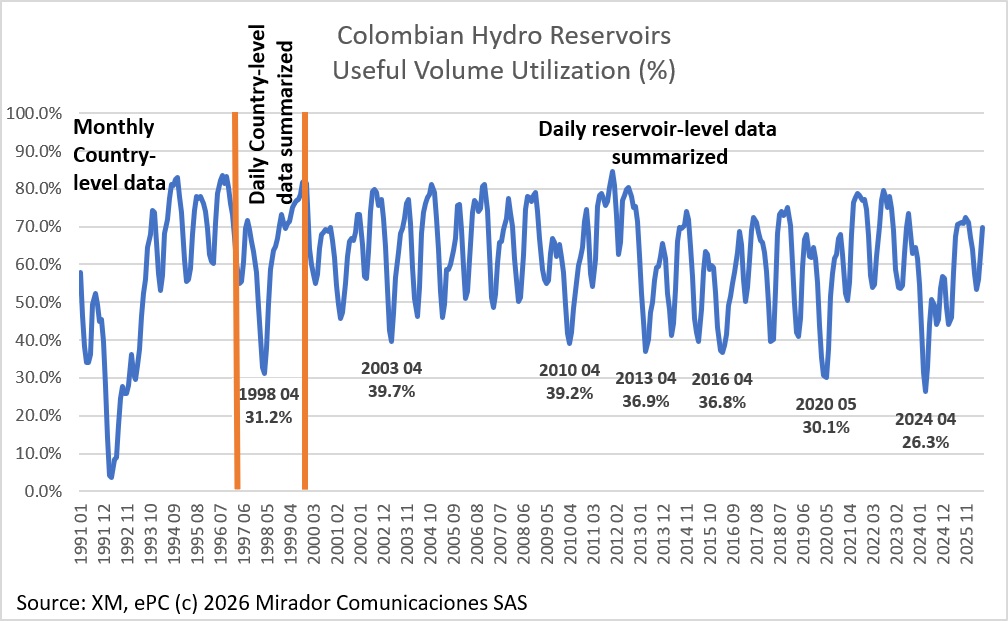
The Petro government said we need to have reservoirs at 80%. MinEnergia Arboleda, who ran XM under Petro, now says we should be at 90%. The graph shows that, at the end of August, we were not quite at 80% yet.
Read moreColombian sugar and ethanol producer Incauca expects energy to account for 13-14% of its revenue in 2027, as it moves ahead with five new projects.
Read moreColombia has closed its pro tempore presidency of the Andean Electrical Interconnection System (SINEA) and passed it to Ecuador for 2026-2027.
Read moreThe government has asked Congress to shift CoP$1.2T within the 2026 budget to pay what Air-e owes the power market.
Read moreColombia's biofuels industry has avoided 15.5 million metric tons of greenhouse gas emissions since 2022 while moving about CoP$25T over five years, roughly 3% of annual manufacturing-industry GDP.
Read moreColombia's environmental licensing authority (ANLA) cleared two small transmission projects in Cundinamarca on consecutive days, both built to connect data centers to the national grid.
Read moreThe government has widened eligibility for "Caribe Cambia tu Energía," a program that gives Caribbean households a 40% incentive to replace old refrigeration equipment, by removing a ceiling on monthly electricity consumption.
Read moreSenator Gonzalo Baute has formally asked the Energy and Gas Regulatory Commission (CREG) to explain whether it considered the Caribbean's climate when designing its national energy-saving program.
Read moreEnel Colombia is fighting a Bogotá city council proposal that would require the capital's electricity cables to go underground, calling it technically unworkable and financially out of reach.
Read moreColombia's energy establishment is split over the right fix for a worsening firm-energy deficit: hold more reliability auctions to bring in new capacity or focus on getting already-awarded projects built.
Read moreColombia's government reached an agreement with Enel Colombia and AES Colombia to reschedule major maintenance at two of the country's largest hydroelectric plants -- El Guavio and Chivor II -- so the work doesn't overlap during the peak-demand months of the 2026-2027 El Niño.
Read moreExecutives from Air-e and Afinia used Andesco's 28th congress to warn that both Caribbean-region utilities face financial distress serious enough to demand immediate structural intervention, not incremental fixes.
Read moreA customer in Barranquilla's Olaya neighborhood is facing judicial proceedings after attacking Air-e technicians with a hammer and damaging the company's vehicle during a visit tied to his unpaid CoP$2.6 million electricity bill.
Read morePresident Abelardo de la Espriella issued Presidential Directive No. 3, ordering five ministries and the national disaster-risk agency UNGRD to jointly develop a coordinated response roadmap for the El Niño phenomenon expected to intensify through 2026-2027.
Read moreIsagen is selling four small hydroelectric plants and five solar parks – roughly 208 MW of combined installed capacity – to a consortium formed by EDF Power Solutions and BTG Pactual Commodities.
Read moreUPME director Rafael Fragozo gave an update on Colombia's transmission expansion pipeline this week, confirming seven works already under execution alongside a broader rollout of new bidding processes.
Read moreColombia's railway and public-transit sector produced a lighter crop of news this quarter, but the through-line is consistent.
Read moreBrazilian asset manager Patria Investments has sold its controlling stake in Puerta de Oro, Colombia's largest solar park, to Colombian generator Isagen.
Read moreColombia's environmental authorities have approved raising Hidroituango's reservoir level from 408 to 420 meters above sea level, a 12-meter increase that unlocks meaningful extra storage just as El Niño tightens the hydrological outlook.
Read moreColombia's government will not hold any energy-reliability auctions in 2026, pushing the process into 2027 instead.
Read moreFacing a fiscal deficit CARF projects could reach 10% of GDP by the close of 2027 and net debt around 67.3% of GDP, former Finance Minister Mauricio Cárdenas told Blu Radio that selling Ecopetrol's majority stake in ISA to Colombia's pension funds would be a smart move.
Read moreColombia's biofuels sector avoided an estimated 15.5 million tons of greenhouse gas emissions and roughly 3,400 tons of particulate matter between 2022 and 2026.
Read moreCamilo Sánchez, president of Andesco, laid out a stark picture of Colombia's supply-demand imbalance heading into the peak of El Niño.
Read moreColombia's gas-import lifeline came under direct strain this week when a mechanical failure forced SPEC LNG's floating regasification unit in Cartagena to cut capacity from 475 to 400 mmcfd, just hours after authorities had flagged the risk of running the plant too hard.
Read moreVice President José Manuel Restrepo acknowledged at Acolgen's 18th Annual Energy Congress that Colombia's electricity system faces a complex situation, inherited as a blackout risk from the prior administration.
Read moreAcolgen president Natalia Gutiérrez told the association's Annual Energy Congress that Colombia faces two distinct problems: "we have a short-term need. A structural problem."
Read moreCiti analyst Johanna Chua said equatorial Pacific warming has crossed the threshold defining the most intense El Niño episodes on record, with sea-surface anomalies near 3°C through September 14th.
Read moreAndeg president Alejandro Castañeda endorsed CREG's energy-savings program but called for adjustments accounting for the Caribbean's heat.
Read moreVice President José Manuel Restrepo told Bogotá's Acolgen Congress that only 1.9% of expected new generation capacity came online in 2025 -- the fifth consecutive year of that shortfall -- directly tying Colombia's stalled electricity buildout to its broader economic ambitions.
Read moreIsagen president Camilo Marulanda told Valora Analitik at Acolgen's congress that the company is advancing nearly 800 MW of solar projects across the country, alongside large-scale battery storage, aiming to add 1,000 MW of new capacity by 2027. They are even on track to hit or slightly exceed that target.
Read moreColombia's biofuels sector is expanding production capacity through roughly US$110 million in new investment from three companies – BioD, Bioenergy, and Oleoflores – while simultaneously advancing sustainable aviation fuel (SAF) and maritime decarbonization.
Read more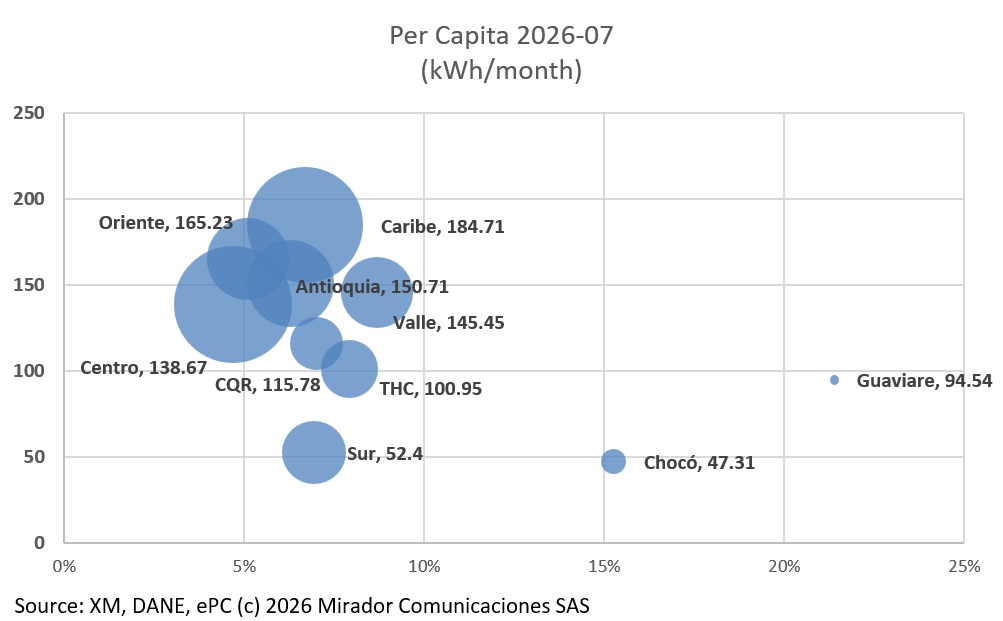
We’ve written a lot lately about the Caribbean coast’s resistance to the CREG’s tariff plan, designed to encourage more frugal use of electricity during El Niño. We thought we’d look at some of the numbers.
Read more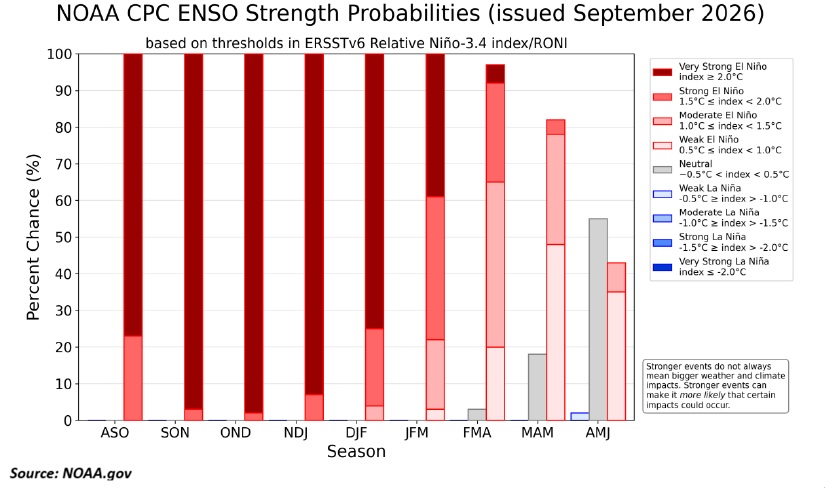
Citi says the Pacific has crossed the threshold defining the most intense El Niño episodes on record, with equatorial sea-surface anomalies near 3°C as of September 14th,levels that put the region "firmly in Súper El Niño territory," per analyst Johanna Chua.
Read moreColombia's electricity regulators are preparing three sequential energy auctions to strengthen system capacity and close the projected gap between supply and demand.
Read moreAES Colombia general manager Federico Echavarría detailed the company's Jemeiwaa Ka'l wind cluster in La Guajira, a joint venture with Ecopetrol (51% AES, 49% Ecopetrol) targeting over 1,000 MW in total capacity, roughly 5% of Colombia's installed capacity.
Read moreColombia's firm-energy deficit – projected at 7.76% of demand for 2026-2027 – combined with severely delayed generation expansion (just 1,027 of the 4,475 MW expected for 2026 had entered operation as of September 10, only 23% of target) is reviving comparisons to 1992's year-long blackout, which forced a complete restructuring of the electricity sector.
Read moreVice President José Manuel Restrepo outlined the government's growth strategy at the 18th Annual Energy Congress, arguing Colombia's anemic private investment – at its lowest share of GDP in 51 years – makes 6% growth impossible without urgent reform.
Read moreTesla owners in Colombia learned via social media that starting September 30th, continuing to access premium connectivity features – real-time traffic, satellite maps, an internet browser, karaoke – will require a CoP$69,900 monthly subscription.
Read moreAfinia enabled a new tool on its website letting households, businesses, and companies across the Colombian Caribbean check their daily electricity consumption, aimed at promoting efficient-use habits during the high temperatures associated with El Niño.
Read moreA fire at the San Mateo electrical substation in Cúcuta left approximately 135,000 users without power for more than three hours on the night of September 16th.
Read more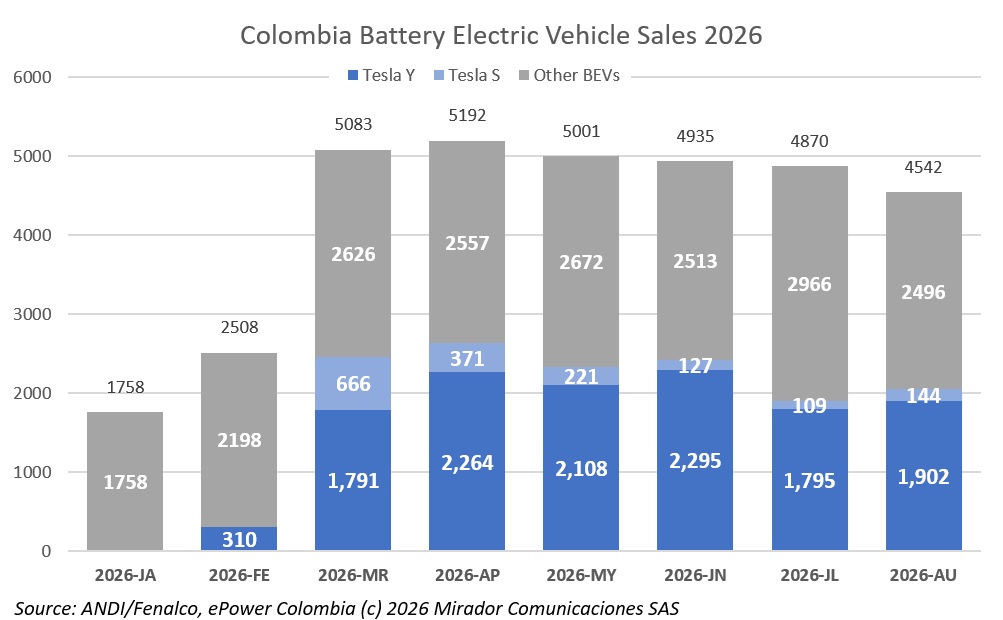
Battery Electric Vehicles fell for the fifth straight month this year and Tesla had its second worst sales month since February, but Tesla Y was still the best selling brand electric or conventional.
Read moreColombia enters this El Niño with less water reaching reservoirs than in 2015-2016 or 2023-2024: since June, rivers have delivered only three of every four liters of normal inflow, while IDEAM puts the odds at 81% that the event crosses the threshold for a "very strong" Niño.
Read moreXM, Colombia's grid operator and an ISA subsidiary, warned in its latest bulletin that the gap between the system's firm (secure) energy and projected demand will reach 7.76% for 2026-2027 and remain at 7.6% for 2027-2028, up sharply from 5.43% in 2025-2026.
Read moreXM's interim general manager Juan Carlos Morales revealed at the utility's Eighth Forum in Cartagena that the August 10 earthquake pushed the National Grid (Sistema Interconectado Nacional) far closer to a full collapse than previously disclosed.
Read moreCREG's Resolución 101 120 (later amended by Resolución 101 126), in effect since September 1, sets an individual monthly consumption target for each regulated user based on their trailing 12-month average. Users who cut consumption more than 10% below that target earn a bill credit; those who exceed it by more than 10% pay a surcharge, only on the excess consumption, not the whole bill, scaled at 30% for strata 1-3, 50% for strata 4-6, and 70% for commercial and industrial users.
Read moreANIF projects a strong-to-very-strong El Niño could add roughly 0.70 percentage points (70 basis points) to Colombia's inflation, with a severe "Súper Niño" scenario potentially pushing total annual inflation as high as 7.3%.
Read moreFollowing the August 10 earthquake, Colombia's energy sector deployed a technical response to strengthen electrical backup at two Quibdó hospitals, led by Minister María Nohemí Arboleda.
Read more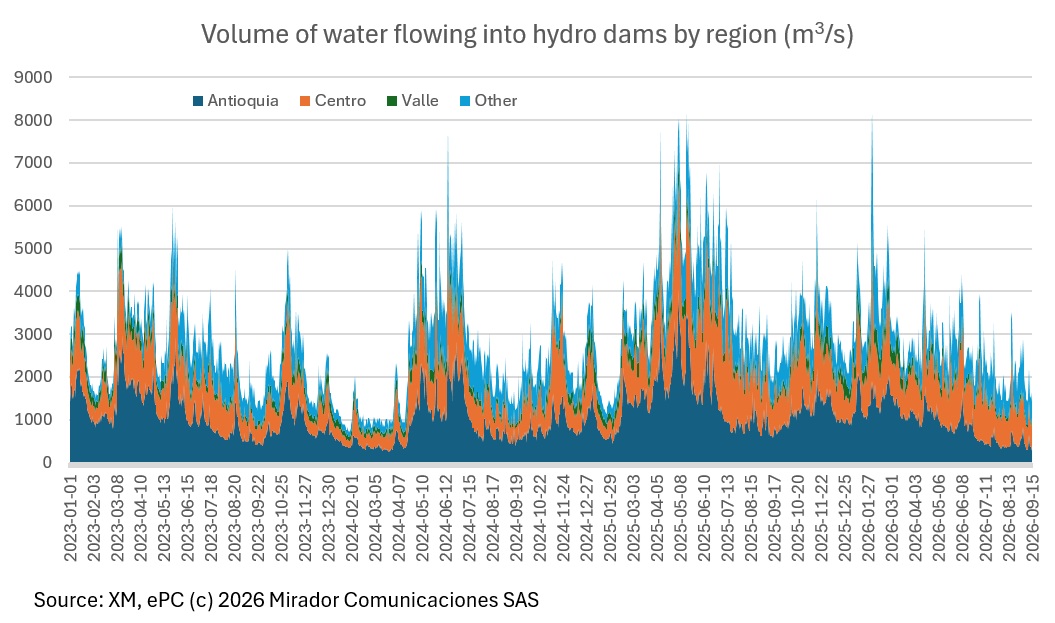
El Niño is here. The lead graph shows the amount of water flowing into Colombia’s hydroelectric dams and it doesn’t take sophisticated statistical analysis (or ChatGPT) to realize that inflows are in decline and have been since probably March.
Read moreElectric mobility has shifted from a purely environmental conversation to one about costs, competitiveness, and business development, according to discussion at E-Conecta, Colombia's electromobility and competitiveness summit held this week in Bogotá.
Read moreResearchers at Universidad Nacional de Colombia (UNAL) selected the Coffee Region as the site for a study examining whether small modular nuclear reactors (SMRs) could feasibly join Colombia's power system, using simulations and computational models to assess the technology's potential in the region.
Read moreCREG director Adriana Jiménez told the Senate's Fifth Commission that the agency is moving to modernize the Reliability Charge, the mechanism ensuring Colombia always has sufficient firm energy, particularly during critical periods like El Niño, after more than 20 years under the current model.
Read moreThe Ministries of Finance and Mines and Energy will present an urgent-message bill to Congress seeking CoP$1.2T to sustain liquidity measures for the electricity sector through El Niño, funded not through new 2026 spending but by reorganizing existing budget line items within the current General Budget.
Read morePresident Abelardo De la Espriella issued Decree 1373 de 2026, assigning Vice President José Manuel Restrepo a broad interinstitutional and intersectoral coordination role covering state modernization, education, strategic resources, energy security, economic growth, competitiveness, macroeconomic stability, and Colombia's international investment positioning.
Read moreEnvironment Minister Fabio Arjona detailed his ministry's measures to shore up the electricity system against El Niño during a September 9 congressional debate on the energy sector, the same session where Minister Arboleda warned tariffs must rise.
Read moreAir-e's intervention marks two years with the financial and administrative crisis deepened rather than resolved.
Read moreGrupo EPM's Innovation Management Model took first place in the national phase of the CIER Innovation Prizes 2026, in the Innovation Platform category, recognizing the group's organizational capacity to convert knowledge into solutions, develop new businesses, and respond to the energy sector's evolving challenges.
Read moreMinister of Mines and Energy María Nohemí Arboleda told Congress's Economic Commissions on September 9 that electricity tariffs must increase, pointing to falling hydroelectric output, greater thermal reliance, and rising gas costs as the drivers.
Read moreColombia's Foreign Ministry and Ministry of Mines and Energy announced two Memoranda of Understanding with the United States government, aimed at strengthening bilateral cooperation on strategic minerals and nuclear energy.
Read moreEPM implemented internal water and energy-saving measures across its main headquarters, other company facilities, and its natural gas and electricity service stations, adjusting lighting, air conditioning, digital displays, escalators, and internal spaces.
Read moreA single ChatGPT query consumes roughly 0.34 watt-hours of electricity or "about what an oven uses in a little over a second," according to OpenAI CEO Sam Altman, plus 0.32 milliliters of water, or "about a fifteenth of a teaspoon."
Read moreDewhurst Group has been officially awarded the exploration permit for the Condor Paipa Geothermal Project in Paipa, Boyacá, formalizing the start of exploration and positioning Paipa as a strategic region for Colombia's geothermal development.
Read moreThe Comisión de Regulación de Energía y Gas (CREG) activated its reliability-sustainment mechanism under Resolución CREG 101 127 de 2026, following technical recommendations from XM's National Dispatch Center and the National Operations Council.
Read moreThe United Nations recognized Grupo Energía Bogotá (GEB) for its model of engagement with ethnic communities, including the group in its latest report on the right to development, under the section "Learning from good practices and sharing them."
Read moreAs Colombia heads into El Niño in earnest, a number of voices, especially former MinEnergia’s have called for an incentive program to promote the “right behaviors”: encourage those who use energy wisely and, frankly, punish those who waste it. Inevitably perhaps, the CREG’s plan provoked criticism from the Caribbean.
Read moreAndeg president Alejandro Castañeda said Colombia's firm-energy cushion has been fully consumed: the 2023-2024 El Niño was survived with a 2% firm-energy surplus, but the country now faces a 2.5% deficit heading into this Niño.
Read moreColombia's Agencia Nacional de Licencias Ambientales (ANLA) granted environmental approval for the transmission interconnection linking the Ariguaní photovoltaic park (200 MWac) to the La Loma 500kV substation, spanning the municipalities of El Paso and Chiriguaná in Cesar.
Read moreSenator Ana Paola García (La U) announced she'll formally summon the SuperServicios to the Senate's Sixth Committee to explain why intervened utility Air-e signed a modernization contract with Chinese company Nationals rather than focusing on lowering the high energy costs burdening Caribbean municipalities.
Read moreThe Ministry of Mines and Energy, through the Fondo de Energías No Convencionales y Gestión Eficiente de la Energía (FENOGE), completed installation of photovoltaic solar systems at Hospital Kennedy in Riofrío, marking the close of a program covering 10 public hospitals across Valle del Cauca.
Read moreVice President José Manuel Restrepo proposed developing new electricity generation capacity in Colombia's Alto Caribe corridor as a precondition for the country to compete for datacenter investment in Latin America, positioning energy as the third of five pillars in a growth agenda aiming for 6% annual economic expansion.
Read moreEcopetrol CFO Camilo Barco said the company has no active process underway to divest its stake in ISA and doesn't plan to in the short term, defending the transmission subsidiary's role within the group's long-term strategy.
Read moreThe Colectora transmission project, critical to connecting La Guajira's wind generation to the national grid, faces another delay after the Ministry of Interior certified 18 additional communities requiring prior consultation.
Read moreBogotá Mayor Carlos Fernando Galán raised an alert about the capital's electricity supply amid El Niño, warning the city could face difficulty meeting rising consumption if infrastructure isn't upgraded soon.
Read more