
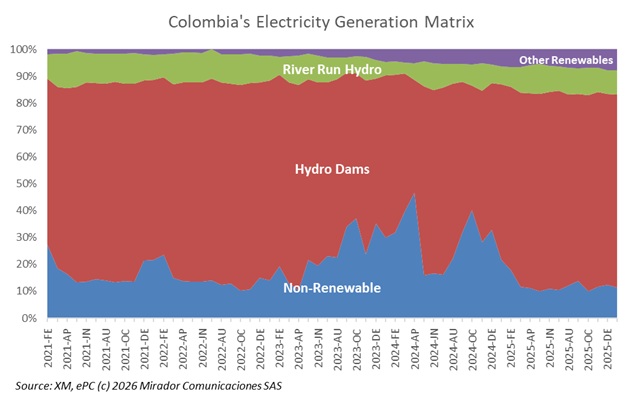
President Gustavo Petro characterized as an administration milestone the recent Unidad de Planeación Minero-Energética (UPME) report confirming Colombia has surpassed 16% participation of non-conventional clean energies in its national electrical matrix. He’s not exactly correct.
Read moreColombia's national government inaugurated two community solar sports fields in Barranquilla's Adelita de Char and Las Malvinas neighborhoods with CoP$4.894 billion investment, integrating sports infrastructure with distributed renewable energy generation to address electricity cost pressures in vulnerable residential sectors.
Read moreColombia's national government announced the appointment of electrical engineer Víctor Paternina as Vice Minister of Energy, bringing over 18 years of energy sector experience.
Read moreEmpresas Públicas de Medellín (EPM) recently published a primer to address public concerns about water management in the wake of heavy rains and President Gustavo Petro’s unsubstantiated accusations that the hydro plants had caused flooding in Colombia’s northwest.
Read moreColombia's Ministry of Mines and Energy announced support for GECELCA's transformation into solar energy through the creation of new subsidiary GECELCA Solar, marking a decisive advance in the country's energy matrix transformation.
Read moreThe Minister of Mines and Energy, Edwin Palma Egea, appointed Karen Schutt Esmeral as the new expert commissioner of the Energy and Gas Regulatory Commission (CREG) .
Read moreISA Energía completed a strategic project improving operational reliability and energy efficiency at Ecopetrol's Barrancabermeja refinery, one of Colombia's most important assets for natural gas supply to the domestic market.
Read moreEmpresas Públicas de Medellín (EPM) is exploring business opportunities in Venezuela following the political transition, with electricity exports as the primary focus.
Read moreEcopetrol Group announced February 17 the launch of pilot testing to convert a heavy cargo vehicle's combustion system to run on a diesel-hydrogen fuel blend, marking Colombia's first operational hydrogen application in fuel transport.
Read morePresident Gustavo Petro urged Colombia's entire business sector to replace coal, gas, and diesel boilers with solar energy during Monday's Cabinet meeting at Casa de Nariño, announcing that government financing for the transition already exists and has been approved.
Read moreColombia's major hydroelectric operators defended their reservoir management practices following President Gustavo Petro's accusations that Urrá and Hidroituango caused severe Córdoba flooding, with responses highlighting both technical explanations and governance contradictions, according to reports from Valora Analitik, EPM, and Portafolio.
Read moreColombia's General Controller (Contraloría General de la República) flagged a presumed loss of CoP$86.054 billion in two Ecopetrol contracts following a 2024 audit, raising fresh concerns about oversight and project management at the state oil company, La República reported on January 19, 2026.
Read more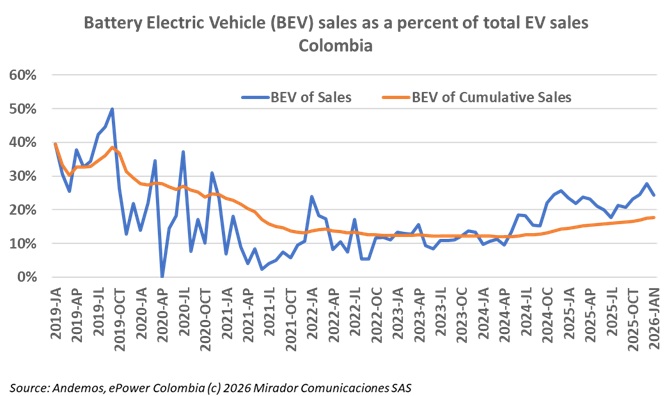
Colombia's electric and hybrid vehicle market surged to record levels in January 2026, with low-emission vehicles capturing approximately one-third of total auto sales during the month, according to RUNT registry data presented by Fenalco and Andi.
Read moreLatin America's electric vehicle market surged to 632,992 electrified units sold in 2025—up 47.5% annually—but a dramatic charging infrastructure divide separates market leaders from fast-growing competitors like Colombia, according to data from Colombia's automotive dealers association (Aconauto) and the Latin American and Caribbean Energy Organization (OLADE).
Read moreEnlaza, a subsidiary of Grupo Energía Bogotá (GEB), completed the Alférez-San Marcos transmission line as part of the 500-kilovolt Southwestern Reinforcement project, strengthening electricity transmission capacity in Valle del Cauca and Nariño regions.
Read more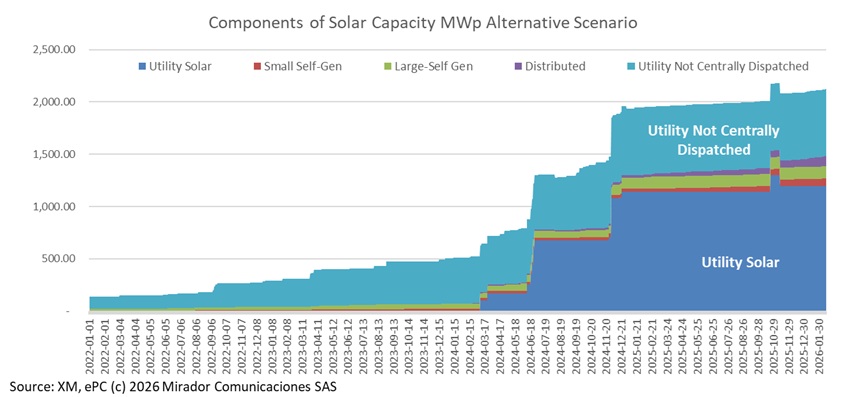
The International Energy Agency's December 2025 update on the COP28 Tripling Renewable Capacity Pledge provides a comprehensive assessment of global renewable energy ambitions for 2030, with noteworthy findings for the Americas region encompassing Latin America. While Colombia is not specifically mentioned in the report, the analysis offers important insights into renewable energy trends across North America, Central America, South America, and the Caribbean that are directly relevant to understanding Latin America's position in the global energy transition.
Read moreColombia will close 2026 with renewable energy capacity exceeding 4,200 MW—enough to power Bogotá and its metropolitan area, benefiting 10.2 million people—according to industry association Ser Colombia.
Read moreColombia's wholesale electricity prices have barely declined despite near-record reservoir levels, exposing the disconnect between hydrological abundance and spot market dynamics.
Read moreMinEnergía announced Barrancabermeja will serve as pilot site for “Energy Blocks” (Cuadras Energéticas), an innovative community solar generation model designed to reduce electricity bills up to 60% for low-income households in informal settlements, according to a February 5, 2026 press release.
Read moreRenewable energy combined with nuclear power will account for 50% of global electricity generation by 2030, marking a dramatic acceleration in the transition away from fossil fuels, according to new projections from the International Energy Agency (IEA).
Read more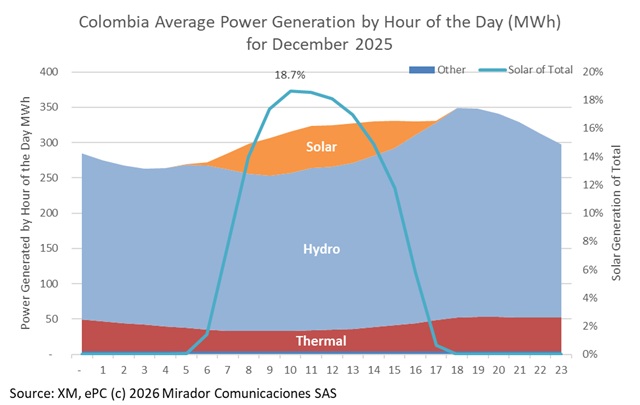
Colombia's energy transition is generating measurable momentum, with the government projecting that expanding renewable capacity could deliver cumulative tariff savings of up to CoP$7 trillion for electricity users over the next five years.
Read moreWith heavy rains triggering floods, landslides, and flash floods across multiple regions of Colombia, the Superintendency of Public Utilities (SuperServicios) issued a formal External Circular on February 4, 2026 ordering all electricity and gas service providers to implement preventive and forward-looking risk reduction measures across their infrastructure networks.
Read moreWith reservoirs across Colombia running at elevated levels amid heavy ongoing rainfall, the Ministry of Mines and Energy issued Circular 40008 on February 10, 2026, calling on wholesale electricity market participants—particularly hydroelectric and low-cost technology generators—to embrace the Energy Commission's (CREG) new Low Prices by Technology rules and translate hydrological conditions into lower tariffs for end users.
Read moreColombia's utility industry association Andesco and energy think tank CREE published a study in late January warning of mounting structural risks to the country's natural gas supply, with all three articles covering the same report released on January 28.
Read moreThe Ministry of Mines and Energy issued a formal preventive alert on February 12, ordering wholesale electricity generators to reinforce measures ensuring continuous and safe power supply across Colombia. The directive was issued through Circular 40009, addressed to all agents operating in the wholesale electricity market.
Read moreAfinia, the EPM Group subsidiary that took over power distribution on Colombia's Caribbean coast five years ago, has surpassed the milestone of 20,000 households enrolled in its prepaid electricity scheme — a model that is delivering savings of up to 35% on monthly bills.
Read moreThe city of Bogotá has relaunched efforts to sell a 9.4% stake in Grupo Energía Bogotá (GEB), the capital's major energy conglomerate, after suspending the process in 2022, Valora Analitik reported on January 30.
Read moreColombia's overall inflation rate stood at 5.35% year-on-year in January 2026, remaining above the central bank's 5% threshold, but official data showed a notable divergence within the energy segment: electricity prices continued falling while natural gas costs kept rising.
Read morePresident Gustavo Petro announced the government is evaluating declaring an Economic, Social and Environmental Emergency in Córdoba and Sucre departments following catastrophic flooding that has claimed 14 lives and devastated the Caribbean region.
Read moreColombia's Environment Ministry and environmental licensing authority ANLA have significantly accelerated renewable energy project approvals under the Petro administration, according to Minister Irene Vélez in an exclusive interview with Valora Analitik published February 4.
Read moreLatin America is entering a new phase of energy transition where success will depend less on renewable capacity additions and more on grid planning, institutional coordination, and community engagement, according to Daniel Díaz, executive secretary of the World Energy Council (WEC) in Colombia.
Read more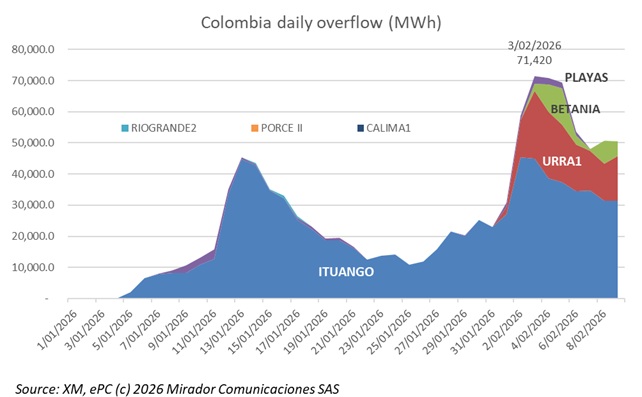
Never one to let facts get in the way of a good smokescreen and always looking for an opportunity to denigrate the power generation industry, President Gustavo Petro blames the hydroelectric plants for spilling an excess of water on the unfortunate residents of Colombia’s northwest. He says they did it to raise tariffs by having more power generated by thermal.
Read moreGrupo Energía de Bogotá (GEB) outlined an ambitious 2026 agenda focused on improving stock liquidity, strengthening corporate governance, and consolidating strategic projects.
Read more
Energy Minister Edwin Palma categorically dismissed the possibility of a blackout in Colombia's Caribbean region, emphasizing regulatory measures taken by the government to ensure continuous service.
Read moreVice Minister of Mines and Energy Karen Schutt announced a comprehensive package of measures to strengthen the Caribbean region's electrical system, including urgent transmission infrastructure works, tariff stabilization, and expanded subsidies for vulnerable users. The government activated exceptional mechanisms to unblock historically delayed investments in this zone.
Read moreMG Colombia unveiled its electric mobility strategy alongside the launch of the MGS5 EV SUV, with brand manager Paola Ruiz outlining ambitious growth targets for 2026.
Read moreThe Constitutional Court provisionally suspended taxes imposed on electricity generators through decrees 1390 of 2025 and legislative decree 0044 of January 21, 2026.
Read moreThe Superintendency of Public Services designated Tania Peñaranda as interim intervention agent for Air-e, making her the fifth person to assume that responsibility since the intervention process began amid a profound financial and operational crisis.
Read moreThe Superintendent of Public Services, Felipe Durán Carrón, conducted an inspection Saturday at the Urrá hydroelectric plant in Córdoba following President Gustavo Petro's attribution of partial responsibility for Caribbean coast flooding to energy generating companies.
Read moreBanco de Bogotá achieved its best historical results in two of the most rigorous international environmental, social, and governance evaluations: S&P Global's Corporate Sustainability Assessment (CSA) and the Carbon Disclosure Project (CDP), confirming its position among the world's strongest banks in ESG and climate change management.
Read more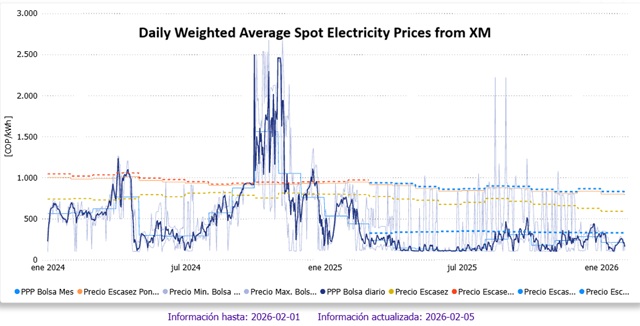
Colombia's wholesale electricity prices have fallen sharply in response to improved reservoir conditions, with spot market rates declining 26 percent year-over-year from CoP$797 per kilowatt-hour to CoP$590/kWh, according to XM, the country's electricity market administrator.
Read moreJaime Lombana, spokesperson and lawyer for Air-e’s original owners, the electricity distributor serving Colombia's Atlantic coast departments, sharply rebutted Mines and Energy Minister Edwin Palma's recent suggestion that the company should be liquidated, arguing such action would obscure irregularities committed during 16 months of government intervention.
Read moreAs global energy markets face volatility, accelerating electrification, and heightened operational and geopolitical risks, the energy transition has evolved from an environmental discussion into a strategic matter of security, resilience, and energy sovereignty.
Read moreThe Organization for Economic Co-operation and Development published its 2026 Environmental Performance Review for Colombia, crediting the country with progressive strengthening of its political and institutional framework for addressing climate change and biodiversity loss over the past decade.
Read more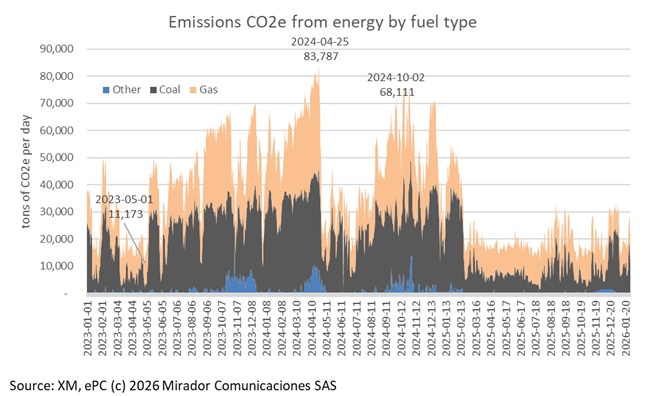
Colombia has avoided nearly 7 million tonnes of CO₂-equivalent emissions during the Petro administration through the entry into operation of clean energy projects including solar, wind, and small hydroelectric facilities, the Mines and Energy Ministry announced on World CO₂ Emissions Reduction Day.
Read moreEcopetrol is finalizing the purchase of seven solar parks from Spain's Grenergy Renovables, the latest move in an aggressive clean energy acquisition campaign that has seen Colombia's state oil company acquire 16 renewable projects in less than a year.
Read moreGreenwood Energy completed financial close on Terra Site I, the first phase of Terra Initiative, a private-indigenous solar energy farm developed in partnership with the Arhuaco People in the Sierra Nevada de Santa Marta.
Read moreMy “give back gig” is I work with the electrical engineer’s association (ACIEM) where I get involved in high technology and some energy issues. In that role, I’ve spent a lot of time at ACIEM events (like Enercol) where I got to meet ex-GEB president, Sandra Fonseca and see her discuss sectoral issues. I was somewhat surprised to see she’d left Asoenergia (where she was Executive Director) but then less surprised to see she was running for senator, under the umbrella of Nuevo Liberalismo.
Read moreThe Constitutional Court's provisional suspension of the economic emergency decree could worsen the energy crisis facing Caribbean departments due to Air-e's precarious financial situation, according to government officials.
Read moreColombia's industrial natural gas demand reached its lowest level in a decade during December 2025, triggering increased consumption of more polluting fuels as companies abandon gas for coal, diesel, fuel oil, and liquefied petroleum gas.
Read moreActing Environment Minister Irene Vélez Torres led a dialogue with 40 Colombian ambassadors and diplomatic mission representatives to advance preparations for the First Conference for Transition Beyond Fossil Fuels.
Read moreThe Ministry of Mines and Energy issued a draft resolution for public comment regulating the Colombia Solar program, transforming traditional electricity subsidies into solar self-generation for households in strata 1, 2, and 3 of the National Interconnected System.
Read moreColombia's Constitutional Court suspended President Gustavo Petro's economic emergency decree, halting tax measures targeting petroleum, mining, and other sectors. However, Decree 044 – imposing new levies on electricity generators to finance Air-e – remains in force and is scheduled to take effect February 2, creating legal uncertainty and industry alarm.
Read moreOn January 26, 2026, Ecuador increased Colombian oil transport costs through the Sistema de Oleoducto Transecuatoriano (SOTE) by 900%, from US$3 to US$30 per barrel, triggering Colombia's suspension of electricity exports.
Read moreThe Centro Nacional de Consultoría (CNC) presidential poll conducted January 15-21, 2026 among 2,202 people in 56 municipalities reveals Iván Cepeda maintaining his frontrunner position with 28.2% voter intention, while competition intensifies for second place ahead of Colombia's May 2026 elections.
Read moreThe resignation of Nelson Javier Vásquez Torres as Air-e's special intervention agent has intensified concerns about the electricity crisis affecting over 1.3 million users across 57 municipalities in Atlántico, Magdalena and La Guajira.
Read more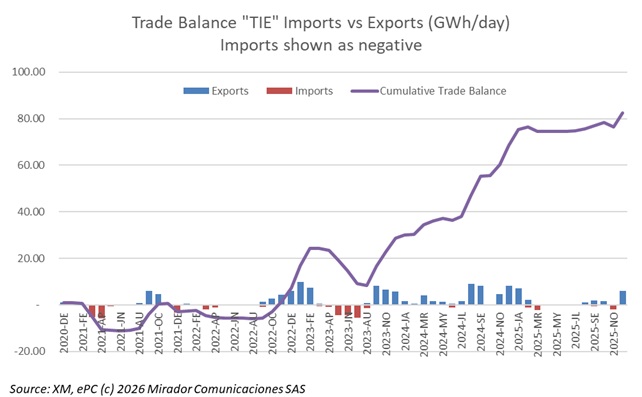
Ecuador's Ministry of Environment and Energy asserted that the national electrical system has sufficient capacity to meet daily energy demand with domestic generation, even facing potential limitations on imports from Colombia.
Read moreColombia's energy panorama for 2026 is expected to be one of the most challenging of the last decade, with rising prices and a narrow margin between generation and demand driving projected growth of 20-40% in the energy efficiency technology market.
Read moreEcopetrol and Frontera Energy marked World Clean Energy Day with the inauguration of the new Quifa Solar Farm, incorporating 18MWp in the first quarter of 2026 and advancing Colombia's energy transition.
Read moreBrazil leads Latin America in billionaire wealth concentration with 66 billionaires controlling US$253.2B, followed by Mexico (over US$200B), Chile, Colombia, and Argentina, according to an Oxfam report presented at the World Economic Forum in Davos. Meanwhile the CIDA says Colombia is the most unequal society in the region.
Read more
Colombia's solar energy sector demonstrated significant expansion in December 2025, with solar parks contributing 7.17% of total renewable electricity generation, according to XM data, as reported by El Tiempo. This represents a 17.49% increase compared to November 2025, underscoring the country's advancing clean energy transition.
Read moreColombia's Ministry of Mines and Energy launched the second phase of the 'Caribe, Cambia tu Energía' program in Suan, Atlántico, targeting 20,000 households across the Caribbean region with appliance replacement initiatives aimed at reducing electricity consumption and lowering utility bills.
Read moreColombia's foreign direct investment (FDI) landscape in 2025 demonstrated resilience amid global economic headwinds, with renewable energy emerging as the dominant sector and the United States maintaining its position as the primary capital source.
Read moreOpinion polls on Colombians’ choices for president come fast and furious these days. For now there are two, perhaps three clear front runners. What if anything can we say about energy policy under each of them?
Read moreEmerging markets face critical challenges attracting energy investment despite holding world-class renewable resources and representing the bulk of future energy demand.
Read moreThe World Economic Forum's Transitioning Industrial Clusters (TIC) initiative has partnered with Colombia's largest port-based industrial area to advance low-carbon growth frameworks. The Cartagena Industrial Cluster represents a key example of how regional collaboration can drive energy transition in emerging economies.
Read moreColombia's Energy and Gas Regulatory Commission (CREG) resumed operating with its complete team of six expert commissioners after nearly three years of unprecedented vacancies, following the recent swearing-in of Ángela Álvarez and Adriana Jiménez before Mines and Energy Minister Edwin Palma.
Read moreEPM announced the successful rehabilitation of the Sonsón hydroelectric plant in eastern Antioquia, restoring 18.5 megawatts (MW) of clean energy capacity to Colombia's National Interconnected System (SIN) following a CoP$24B investment.
Read moreThe Petro government created two new levies for energy generators under Legislative Decree 044 of 2026, which "adopts measures to ensure the provision of residential electricity public service" while acknowledging a liquidity crisis in the sector.
Read moreColombia's energy sector erupted in protest after the government issued Decree 044 of 2026 under economic emergency powers, imposing two new levies on power generators to address the liquidity crisis affecting intervened companies like Air-e.
Read moreIn a Guarumo-Ecoanalítica poll (Jan 14-22, 4,245 respondents): Iván Cepeda of Pacto Histórico leads with 33.6% support, followed by conservative attorney Abelardo De la Espriella at 18.2%, and Centro Democrático's Paloma Valencia at 6.9%.
Read moreISA Energía Peru, a subsidiary of Colombian state-controlled long-distance electrical transmission company, announced commercial operation of the San Gabriel connection project, representing the highest-altitude electrical infrastructure in the company's history.
Read more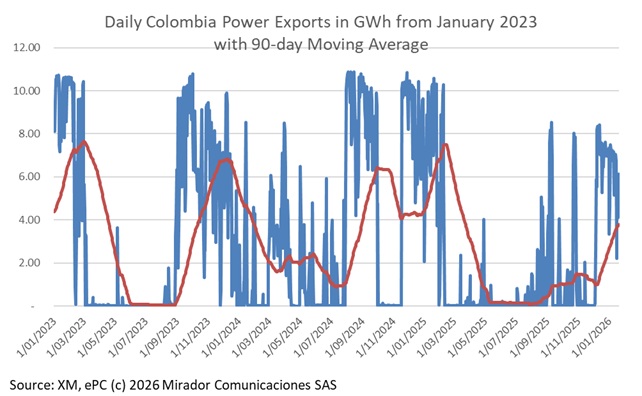
Colombia's Ministry of Mines and Energy issued a resolution suspending International Electricity Transactions (TIE) with Ecuador, responding to tariff measures announced by Ecuadorian President Daniel Noboa while prioritizing domestic energy security amid climate variability concerns. The decision affects electricity flows representing 8-10% of Ecuador's consumption, according to government data.
Read moreColombia's Environment and Sustainable Development Ministry has opened a public consultation to define the roadmap for implementing the Escazú Agreement, aiming to strengthen environmental democracy and guarantee rights to information, public participation, and environmental justice.
Read moreISA president Jorge Carrillo revealed the Ecopetrol subsidiary is preparing to bid on two new infrastructure projects in Chile, deepening its presence in a sector that generates 18% of company revenues.
Read moreA new GAD3 poll revealed by Noticias RCN shows Iván Cepeda (Pacto Histórico) leading Colombia's presidential race with 30% voter intention, followed by Abelardo de la Espriella (Defensores de la Patria) at 22%, and Paloma Valencia (Centro Democrático) at 3%. The survey of 1,207 respondents carries a 2.83% margin of error.
Read moreColombia's Ministry of Mines and Energy issued a resolution convoking the country's first long-term electricity contracting mechanism, enabling contracts up to 15 years duration to secure energy supply, diversify the electrical matrix, and advance energy transition in compliance with Decree 1091 of 2025.
Read moreBusiness associations and chambers of commerce from Colombia's Caribbean coast endorsed the Ministry of Mines and Energy's proposed CoP$8 per kWh increase electricity tariffs, warning of systemic risk threatening the national electrical grid due to intervened distributor Air-e's mounting debts.
Read moreClean technologies (cleantech) are transforming environmental approaches but face significant obstacles beyond technical innovation, including financing gaps, limited demand, and scalability constraints that require coordinated solutions to achieve sustainable energy transition.
Read more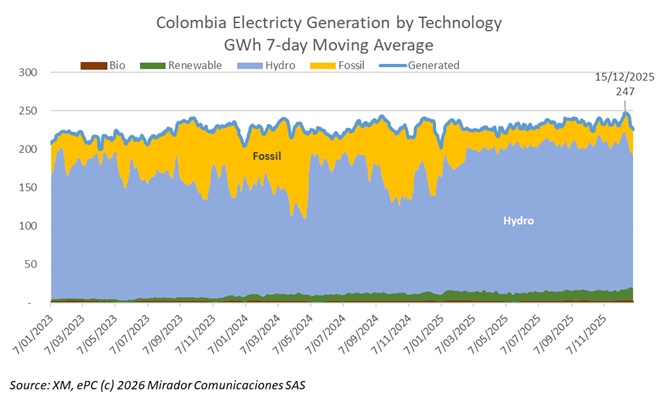
Last week I wrote about reservoir levels but didn’t include generation statistics (because we hadn’t updated our detailed databases) and yesterday we wrote about monthly generation statistics but had nothing to say about demand (because XM hasn’t updated its monthly demand figures).
Read more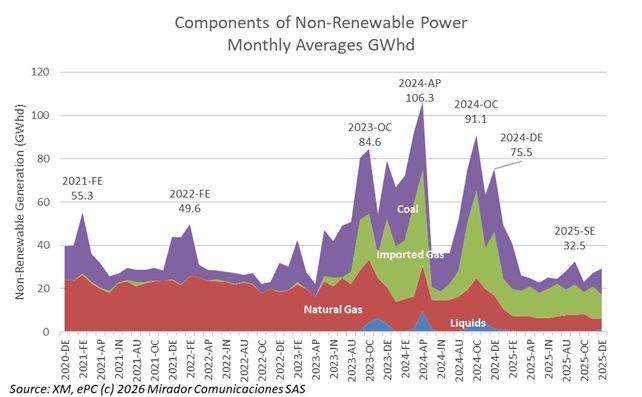
Power market manager XM reported that reservoir levels went down in December. Power generation was up but not from hydro. Instead, the increase came from solar (no surprise) and coal (surprise!)
Read moreLatin America and the Caribbean expect 3.7% growth in installed electricity generation capacity during 2025, reaching 562,000 MW total, driven primarily by renewable energy expansion. The growth stems from new wind and solar facilities plus natural gas thermal plants gradually displacing fossil fuel-based generation.
Read moreGrupo Energía Bogotá's (GEB) subsidiary Enlaza inaugurated the Bonda 220 kV transmission project, key infrastructure designed to strengthen the National Transmission System, improve electrical service reliability, and facilitate integration of renewable energy projects in Colombia's Caribbean region
Read moreColombia's Ministry of Mines and Energy announced the launch of "Caribe Conectado: Urgent Works for Reliable and Competitive Electric Service," a US$1.7B infrastructure program designed to strengthen the Caribbean region's electrical grid and enable integration of up to 6 gigawatts (GW) of renewable energy capacity.
Read moreThe Ministry of Mines and Energy issued a draft decree modifying Decree 1073 of 2015 to strengthen natural gas supply and establish an enabling framework for biogas and biomethane integration into Colombia's energy system.
Read moreColombia's Producer Price Index (IPP) registered an annual decline of 2.63% in December 2025 compared to the same month in 2024, according to La República citing DANE data. The IPP measures price changes at the producer level before goods reach consumers, serving as "an early signal of what may happen later with inflation."
Read moreThe Ministry of Mines and Energy allocated CoP$15.176B for electrical grid normalization in neighborhoods across Ciénaga, Sitionuevo, and El Piñón municipalities in Magdalena department, benefiting over 3,500 residents who faced precarious energy service conditions for years.
Read moreAn Arbitration Tribunal approved an agreement between EPM and Sociedad Hidroeléctrica Ituango, ending arbitration proceedings initiated in 2020
Read more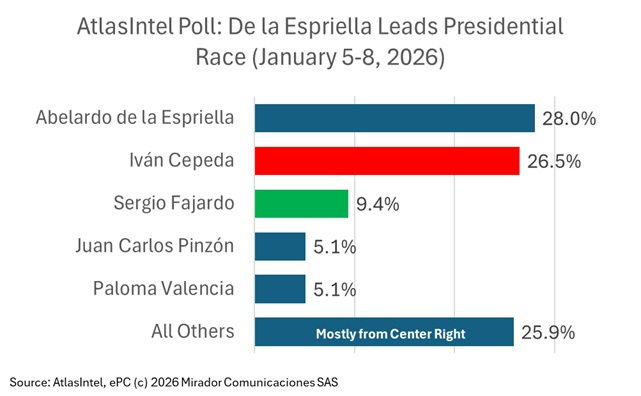
An AtlasIntel poll (sponsored by Revista Semana) conducted January 5-8, 2026, reveals Abelardo de la Espriella leading Colombia's presidential race with 28% voter intention, narrowly ahead of Iván Cepeda at 26.5%. The survey of 4,520 participants carries a 1% margin of error for general results and 3% for party consultations, with 95% confidence level.
Read moreLatin America's electric mobility sector recorded significant growth through October 2025, with 673,811 light electric vehicles in circulation, though representing only 0.5% of the total regional light vehicle fleet. The sector expanded dramatically, growing 851% between 2022 and 2025 – nearly tenfold.
Read moreColombian energy company Terpel announced its strategic focus on three business lines for 2026—solar energy, electromobility, and lubricants—to compensate for impacts from divestments in Ecuador and Peru.
Read moreColombia's Ministry of Mines and Energy published a study examining energy distribution areas and potential alternatives to maximize efficiency and operability. These distribution areas define tariff rules across territories, meaning two users with identical energy consumption can pay different amounts depending on their location.
Read more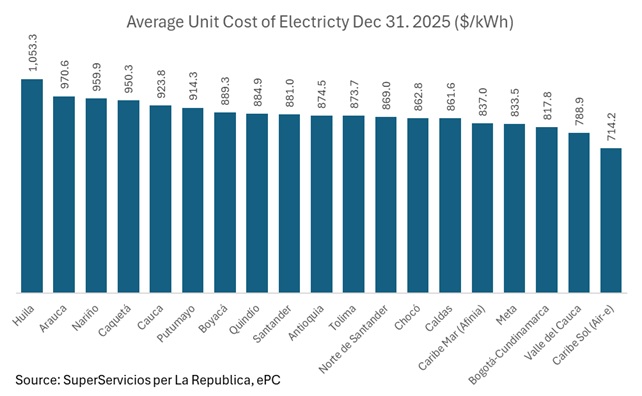
Huila and Arauca lead Colombia's departments with the most expensive electricity rates, a situation that could worsen with the Ministry of Mines and Energy's draft decree proposing a temporary CoP$8/kWh surcharge for National Interconnected System (SIN) users.
Read moreColombia's Ministry of Mines and Energy initiated pilot tests evaluating low-emission hydrogen injection in heavy-duty trucks as part of the national clean energy transition strategy. We check the maths…
Read moreColombia confronts unexpected changes to its energy strategy following political upheaval in Venezuela, where Nicolás Maduro was imprisoned and Delcy Rodríguez sworn in as president, with the United States seeking involvement in the neighboring country's affairs.
Read moreEcopetrol received the "Gold Standard" recognition for the third consecutive year for its advances in methane emissions management, detailed measurement plan implementation, reporting quality and transparency, and establishment of reduction targets. The recognition is granted by the Oil and Gas Methane Partnership (OGMP 2.0), an initiative led by the United Nations Environment Programme.
Read moreThe Fund for Non-Conventional Energies and Efficient Energy Management (Fenoge), in partnership with the International Organization for Migration (IOM), concluded the EN-Comunidad initiative by delivering five technical studies for energy system evaluation and characterization, plus 50 structured projects promoting energy solutions across 43 Colombian territories, including Bogotá.
Read morePresident Gustavo Petro announced the national government's willingness to allocate COP$1.5 trillion for purchasing an electric fleet for Bogotá's TransMilenio system, opposing the proposed COP$350 fare increase that would raise the ticket price to COP$3,550.
Read moreColombia's Ministry of Mines and Energy is preparing a significant adjustment to its proposed COP$8 per kilowatt-hour surcharge designed to address Air-e's COP$2.5T debt accumulated through November 2025.
Read more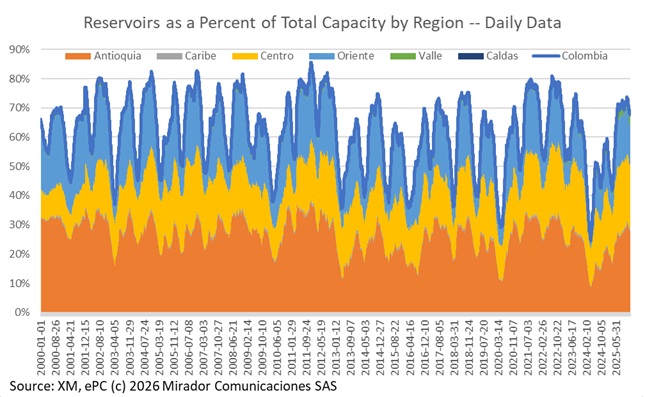
Coming back from a month in Canada where the weather was, well, typical for this time of year, I have been disappointed (to say the least) to find the weather in Bogotá was only marginally better. OK. An exaggeration. But then we found an article suggesting the eastern part of the country was in drought. Which child has come to visit?
Read more